
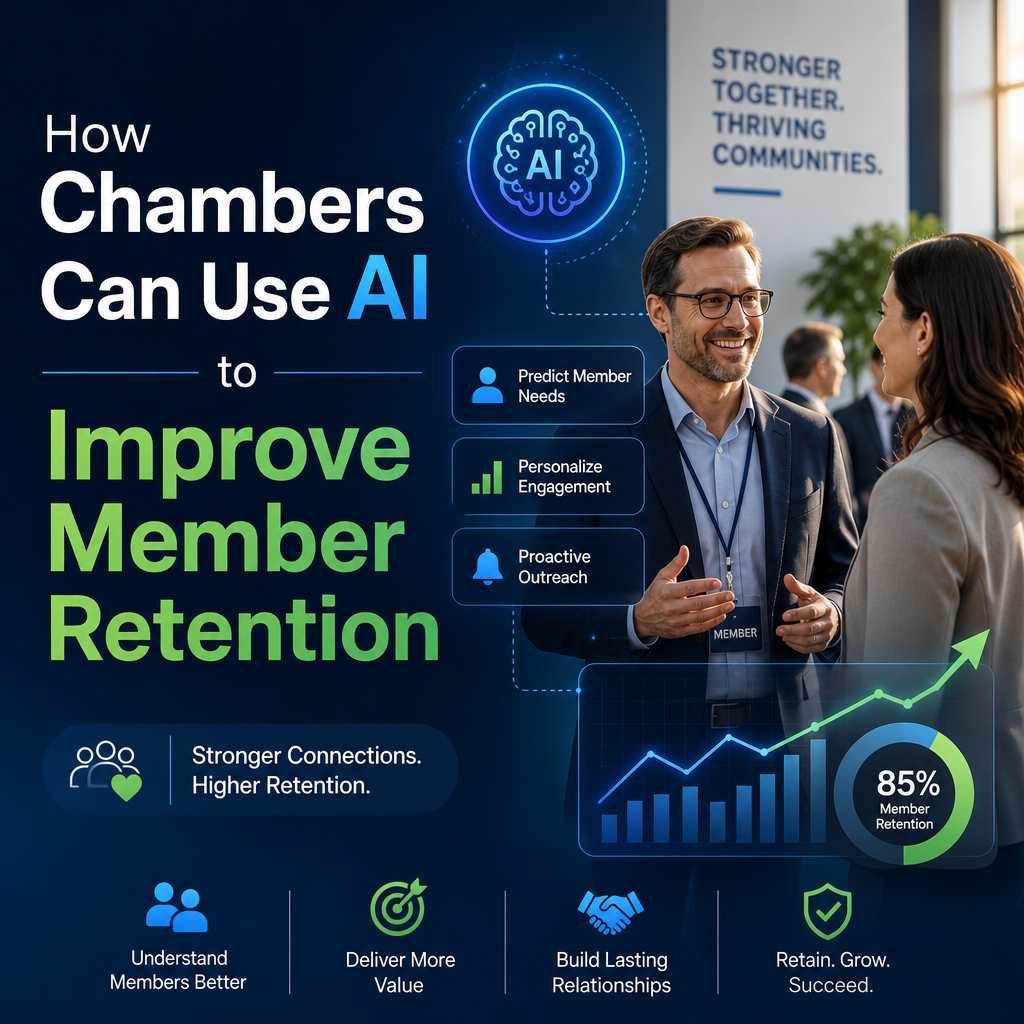
How Chambers Can Use AI to Improve Member Retention
How Chambers Can Use AI to Improve Member Retention
For chambers of commerce, member retention depends on making membership consistently useful. Businesses want timely information, meaningful connections, and support that reflects their needs. Artificial intelligence can help chambers deliver these benefits more efficiently—provided it supports, rather than replaces, personal relationships.
AI tools can analyze member data, personalize communications, and reveal where engagement is slipping. Used thoughtfully, they give chamber teams more time to focus on the conversations and connections that keep members involved.
Understand What Members Need
Chambers often collect valuable information through event registrations, surveys, email engagement, committee participation, and membership records. AI can help bring these signals together and identify patterns that might otherwise be difficult to spot.
For example, a chamber could use AI to discover that small businesses engage most with practical workshops, while larger organizations respond to policy briefings or leadership events. It might also flag members who have stopped attending events or interacting with emails.
These insights can help staff ask better questions and offer relevant support. They should not be treated as definitive judgments about a member. A decline in engagement might reflect a busy season, a change in staff, or an outdated contact record—not a decision to leave.
Personalize Communication at Scale
Generic messages can make members feel like names on a mailing list. AI can help chambers tailor communications by industry, business size, location, interests, or stage of membership.
A new member might receive an introduction to networking opportunities and a guide to using member benefits. A long-standing member could receive an invitation to mentor other businesses or join a policy discussion. AI-powered tools can also help draft event announcements, follow-up emails, and newsletters for different audiences.
Personalization works best when it is useful and transparent. Chambers should:
- Use accurate, permission-based member information.
- Keep messages relevant and easy to act on.
- Review AI-generated content for accuracy and tone.
- Avoid making members feel watched or stereotyped.
The goal is not to send more messages. It is to make each interaction more valuable.
Spot Retention Risks Early
AI can help identify warning signs before renewal season. A chamber might build a simple engagement score using factors such as event attendance, benefit use, website activity, survey responses, and recent contact with staff.
If a member’s engagement drops, the system can prompt a staff member to reach out. That conversation should be personal—not an automated warning about a score. A friendly check-in can uncover a problem the chamber can address, such as difficulty finding relevant events or confusion about membership benefits.
Predictive tools are only as reliable as the information behind them. Chambers should review their data regularly, watch for gaps or bias, and use risk indicators as prompts for human follow-up rather than as automatic reasons to change a member’s status.
Make Events and Benefits More Relevant
Events are a major part of the membership experience, but a crowded calendar does not guarantee strong participation. AI can help analyze past registrations and feedback to identify topics, formats, and times that members prefer.
It can also support event recommendations. Someone interested in workforce development might be invited to a related workshop, while a new business owner could receive suggestions for introductory networking events. Afterward, AI tools can summarize survey comments and highlight recurring requests, helping the chamber improve future programming.
The same approach can make member benefits easier to navigate. A chatbot or searchable AI assistant may help members find information about sponsorships, referrals, training, or local resources. For complex questions, it should offer a clear route to a staff member.
Keep Human Relationships at the Center
AI can improve efficiency, but retention still depends on trust. Members value being recognized, listened to, and connected with people who understand their businesses. Automated tools should handle repetitive tasks and surface useful insights, while staff remain responsible for judgment, sensitive conversations, and relationship-building.
Before adopting a new tool, chambers should set clear guidelines for privacy, data access, accuracy, and human review. They should also measure whether AI is improving outcomes—not just saving time. Useful indicators include renewal rates, event participation, benefit usage, member satisfaction, and the quality of staff follow-up.
Start Small and Learn
Chambers do not need a large technology overhaul to use AI effectively. They can begin with one practical task, such as summarizing survey feedback, improving member onboarding emails, or identifying inactive members for personal outreach.
Test the approach, ask members and staff for feedback, and refine it before expanding. When AI helps chambers understand members sooner and serve them more personally, it becomes more than an efficiency tool. It becomes a practical way to strengthen the relationships that encourage members to stay.