
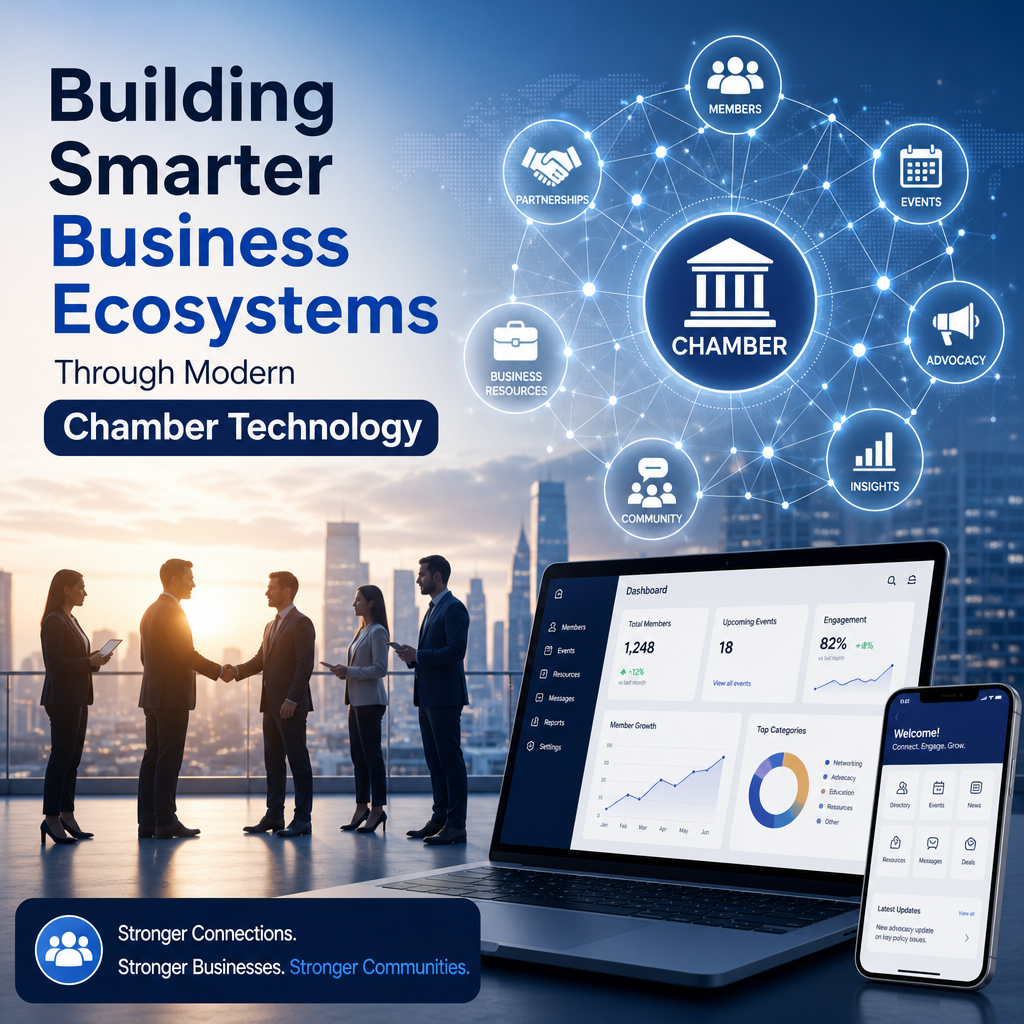
Building Smarter Business Ecosystems Through Modern Chamber Technology
Building Smarter Business Ecosystems Through Chamber Technology
Local businesses need more than introductions to grow. They need timely information, useful connections, practical services, and a clear way to participate in their communities. Chambers of commerce can bring these pieces together by using technology to create smarter, more connected business ecosystems.
Chamber technology is not simply a new website or a collection of digital tools. Used thoughtfully, it helps chambers understand member needs, connect people with opportunities, and make business support easier to access. The goal is to strengthen relationships—not replace them with software.
What Makes a Business Ecosystem Smarter?
A business ecosystem includes the people and organizations that help local companies succeed: business owners, service providers, educators, government agencies, nonprofits, and community leaders. A chamber often sits at the center of these relationships.
Technology can make that network more useful by helping members:
- Find relevant contacts, resources, and events
- Share expertise and discover potential partners
- Access services without unnecessary administrative steps
- Stay informed about local business conditions
- Participate whether they are in person or online
The result is a community where information and opportunities move more efficiently.
Start With Member Needs
The best technology strategy begins with listening. A chamber should understand what members find difficult, what they value, and where they need more support. A new platform may look impressive, but it will have little impact if it does not solve a real problem.
Member surveys, staff conversations, event feedback, and usage data can reveal common challenges. Perhaps new members struggle to meet the right people. Maybe small businesses have trouble finding training or navigating local regulations. These insights help chambers choose tools that serve specific purposes rather than adding complexity.
It is also important to consider different levels of digital confidence. A platform should be accessible to members who are comfortable with technology, while still offering clear guidance and personal support for those who are not.
Connect Tools Instead of Creating Silos
Many chambers already use separate systems for membership records, event registration, email, payments, and online directories. When those tools do not communicate, staff may spend time duplicating information, and members can face a disjointed experience.
A more connected technology setup can make routine tasks simpler. For example, a member’s profile might update across the directory and event system, while communication tools help staff share relevant information based on a member’s interests.
Integration should be practical and secure. Chambers do not need to adopt every available platform. They should prioritize tools that:
- Address a clear member or operational need
- Work reliably with existing systems
- Protect personal and business information
- Are manageable for staff and volunteers
- Can grow as the chamber’s needs change
A smaller set of well-integrated tools is often more effective than a crowded collection of disconnected applications.
Use Data to Improve, Not Overwhelm
Technology can help chambers see which programs members use, which events attract new participants, and where engagement is declining. These patterns support better decisions about programming, outreach, and resource allocation.
However, data is most useful when it leads to action. If an online workshop has low attendance, the chamber might adjust its timing, format, or promotion. If members frequently search for a particular service, staff could create a focused resource page or organize a related event.
Clear data practices matter, too. Members should understand what information is collected and how it is used. Responsible stewardship builds trust and helps ensure technology supports the community rather than intruding on it.
Keep Human Connection at the Center
Digital tools can make it easier to find people and participate, but they cannot fully replace trust built through conversation. A smart business ecosystem combines convenient online access with meaningful in-person and virtual interactions.
A member directory can help people identify potential collaborators. An online event platform can welcome participants who cannot travel. A shared calendar can make local opportunities easier to discover. Chamber staff can then use those tools to make thoughtful introductions and encourage deeper involvement.
This balance is especially important for small businesses, which may have limited time and resources. Technology should reduce friction so members can focus more energy on building relationships and running their organizations.
Build for Long-Term Value
Building smarter business ecosystems through chamber technology is an ongoing process, not a one-time purchase. Chambers should review their systems regularly, gather feedback, and make improvements based on what members actually use.
When technology is selected with care, connected to clear goals, and supported by strong relationships, it becomes a practical foundation for local growth. It helps chambers make their networks easier to navigate, their services more accessible, and their communities more resilient—while keeping people at the heart of every connection.