

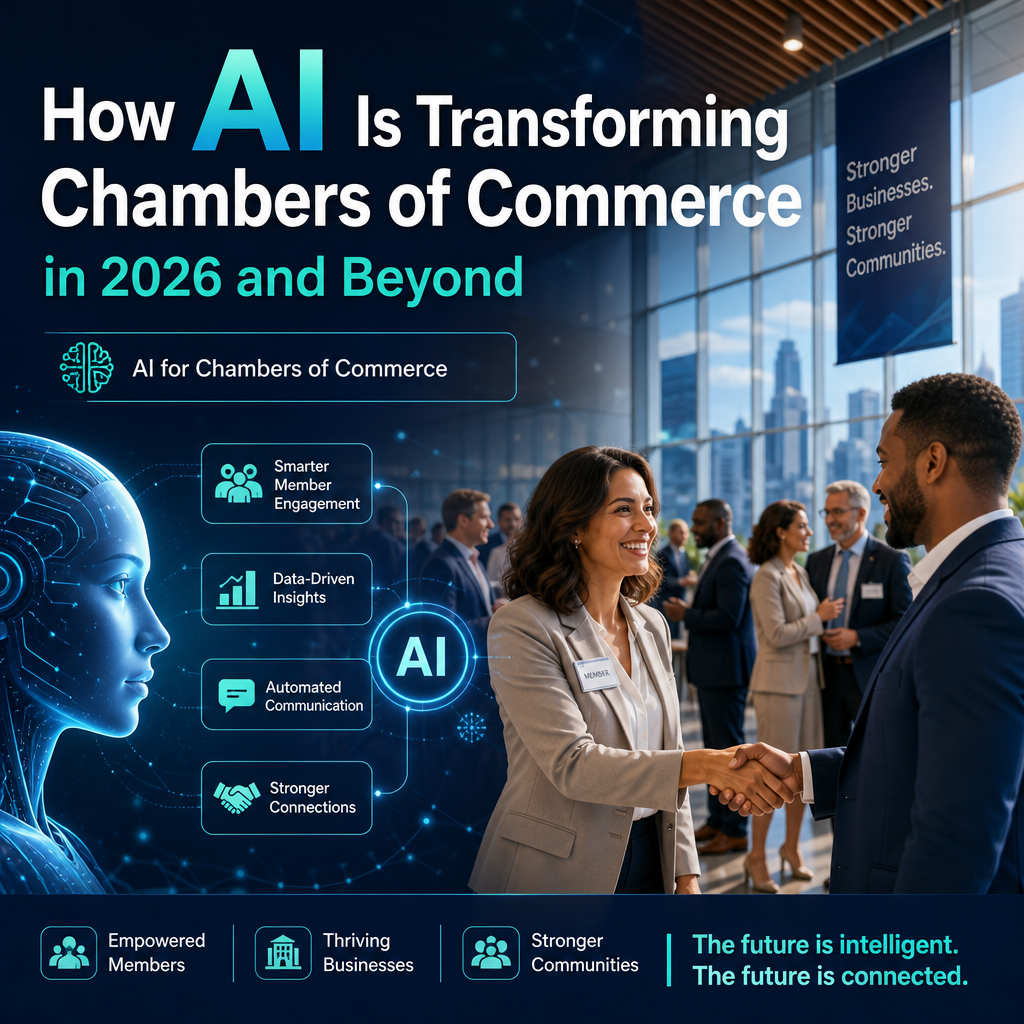
How AI Is Transforming Chambers of Commerce in 2026 and Beyond
How AI Is Transforming Chambers of Commerce in 2026 and Beyond
Chambers of commerce have always helped businesses connect, solve problems, and respond to change. In 2026, artificial intelligence is giving them new ways to deliver that support—often faster and more personally than traditional methods allow.
AI is not replacing the relationships at the heart of chamber work. Instead, it is helping teams make better use of their time, understand member needs, and provide useful services at scale. The chambers that benefit most will combine smart tools with local knowledge, human judgment, and a clear sense of purpose.
More Personalized Member Support
Chambers serve businesses with different sizes, goals, and challenges. AI can help tailor communications and services to those differences.
By analyzing information members have agreed to share—such as industry, location, event participation, and stated interests—a chamber can identify relevant programs and opportunities. A new business might receive guidance on local permitting, while an established manufacturer could be alerted to workforce training or supply-chain events.
AI-powered chat tools can also answer common questions at any time, including how to join, where to find a business directory, or which events are coming up. For complex issues, the tool can direct members to the appropriate staff person rather than pretending to replace expert advice.
Personalization works best when it feels helpful rather than intrusive. Chambers should explain how member data is used and allow people to control their communication preferences.
Faster, More Focused Operations
Administrative work can consume a large share of a small chamber team’s day. AI can reduce routine effort by helping staff:
- Draft newsletters, event descriptions, and social media posts
- Summarize meetings and prepare action lists
- Organize member feedback and survey responses
- Answer recurring questions using approved information
- Create first drafts of reports and grant materials
These tools can make it easier to move from a blank page to a polished draft. Staff still need to verify facts, check tone, and ensure that messages reflect the chamber’s voice. The goal is not to publish more content for its own sake; it is to free up time for meaningful conversations and community work.
Better Insights for Local Economies
Chambers often hear about local economic needs through conversations, events, and member surveys. AI can help bring those signals together. When used responsibly, it may identify recurring concerns—such as hiring difficulties, rising costs, or demand for digital skills—across large volumes of feedback.
That insight can guide practical decisions. A chamber might use it to plan a workshop, brief local partners, or make a case for improved workforce programs. AI can also help summarize public data, making economic trends easier to communicate to members and community leaders.
These findings should be treated as a starting point, not a verdict. Data may be incomplete or biased toward the people who respond. Chamber leaders can test AI-generated insights against direct conversations with businesses, especially those that are less visible or less connected.
Events and Business Connections
AI can improve how chambers organize events and facilitate networking. Recommendation systems can suggest sessions based on a member’s interests, while automated tools can assist with registration questions and post-event follow-ups.
For networking, AI may help identify potential introductions based on complementary services, shared challenges, or common goals. That can be particularly useful for new members who are unsure where to begin. Still, the best introductions often depend on context that software cannot fully understand. Staff members remain essential in making thoughtful connections and building trust.
Responsible Adoption Matters
AI brings real risks alongside its benefits. A tool may generate incorrect information, expose confidential data, or reproduce unfair patterns in the material it produces. Chambers also need to consider accessibility and ensure that members can still reach a person when they need help.
A sensible approach begins with a few safeguards:
- Choose clear use cases. Start with a recurring task or member need, not technology for its own sake.
- Protect sensitive information. Avoid entering private member, financial, or personnel data into tools that are not approved for that purpose.
- Keep humans accountable. Assign staff to review public-facing content and important decisions.
- Measure results. Track whether the tool saves time, improves service, or increases participation.
- Train the team. Help staff understand both the capabilities and limitations of the systems they use.
The Chamber’s Role in an AI-Enabled Future
Beyond adopting AI internally, chambers can help local businesses navigate it. They can host practical workshops, connect members with trusted experts, and create spaces for businesses to discuss implementation challenges. This support is especially valuable for small firms that may lack dedicated technology teams.
In 2026 and beyond, the strongest chambers will use AI to extend their capacity without losing their community focus. Technology can surface patterns, handle routine tasks, and make services easier to access. People will continue to provide the judgment, advocacy, and personal relationships that turn those capabilities into lasting value.


