
Using AI for Personalized Chamber Communications: A Practical Guide
Using AI to Deliver Personalized Chamber Communications
Chambers of commerce serve businesses with different goals, challenges, and levels of experience. A new entrepreneur may need help understanding local regulations, while an established manufacturer may be looking for workforce partnerships or export opportunities. When every member receives the same message, useful information can get lost in the noise.
Artificial intelligence can help chambers make communications more relevant without losing the personal connection that members value. By using AI to organize information, tailor content, and improve timing, chamber teams can deliver messages that better reflect each member’s interests.
What Personalized Chamber Communications Look Like
Personalized communication is more than adding a member’s name to an email. It means sharing information that is useful to a particular business or audience.
For example, a chamber might send:
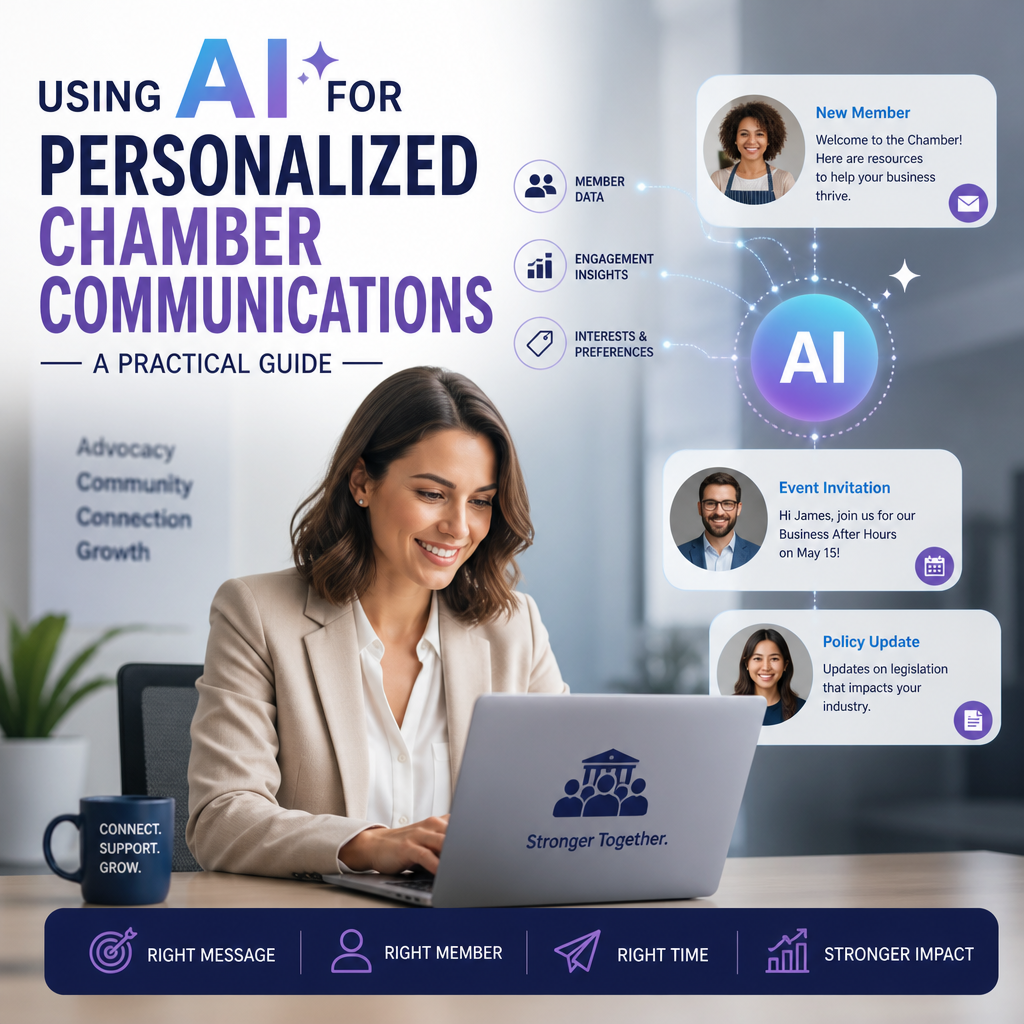
- Event invitations based on a member’s industry or interests
- Updates about grants or training relevant to a business’s size
- Advocacy news connected to a member’s location or sector
- Renewal reminders that explain benefits the member has actually used
- Introductions to programs that support a member’s current goals
AI can help identify these opportunities by analyzing information the chamber already has, such as membership details, event attendance, email engagement, and survey responses. Staff can then create more targeted communications instead of relying on broad, one-size-fits-all messages.
Practical Ways to Use AI
Segment members more thoughtfully
Many chambers group members by broad categories such as industry or membership level. AI tools can help uncover more useful patterns. They might identify members who frequently attend networking events, businesses interested in workforce development, or newer members who have not yet engaged with chamber programs.
These insights can support targeted outreach. A chamber could invite frequent event attendees to a peer roundtable, for instance, while sending first-time members a concise guide to making the most of their membership.
Segmentation should remain practical. A small chamber does not need dozens of audience groups. A few clear segments that lead to helpful communication are usually more effective than a complicated system staff cannot maintain.
Draft and adapt content
Generative AI can help staff create first drafts of newsletters, event invitations, member updates, and social posts. It can also adapt a central message for different audiences. An announcement about a business training program, for example, might emphasize hiring benefits for employers and career development for individual participants.
Human review is essential. Staff should check facts, dates, links, tone, and any claims before publishing. AI can speed up drafting, but it does not know the chamber’s community as well as its people do.
Improve timing and follow-up
AI-supported tools can help a chamber notice when members are most likely to engage or when they may need a follow-up. If a member registers for an event, the system might send a relevant preparation guide. If someone repeatedly clicks on small-business resources, staff could share a related workshop or introduce them to a knowledgeable contact.
The goal is not to automate every interaction. It is to make timely, useful follow-up easier for a busy team.
Protect Trust and Member Data
Personalization depends on information, so chambers should be clear about what they collect and how they use it. Use only data that supports a legitimate member-service purpose, follow applicable privacy requirements, and limit access to sensitive information.
Avoid making assumptions based on incomplete or outdated records. An AI-generated recommendation should be treated as a prompt for staff judgment, not as a definitive assessment of a business. Members should not feel watched or surprised by messages that reveal more than they knowingly shared.
A good standard is simple: if a member asked why they received a message, could the chamber explain the reason clearly and respectfully?
Start Small and Measure Results
A chamber does not need a major technology overhaul to begin. Choose one communication challenge, such as improving event attendance or helping new members discover services. Review the data already available, select a manageable audience, and test a tailored message.
Measure more than opens and clicks. Track registrations, replies, program participation, renewals, or direct feedback. These outcomes show whether personalization is helping members—not just generating activity.
Keep the Human Connection at the Center
AI can help chambers deliver relevant information at the right time, but strong chamber communications still depend on trust, local knowledge, and personal relationships. The technology works best when it gives staff more time to listen, make introductions, and respond thoughtfully.
By pairing careful data use with human judgment, chambers can make every message feel less like a broadcast and more like a useful connection.