
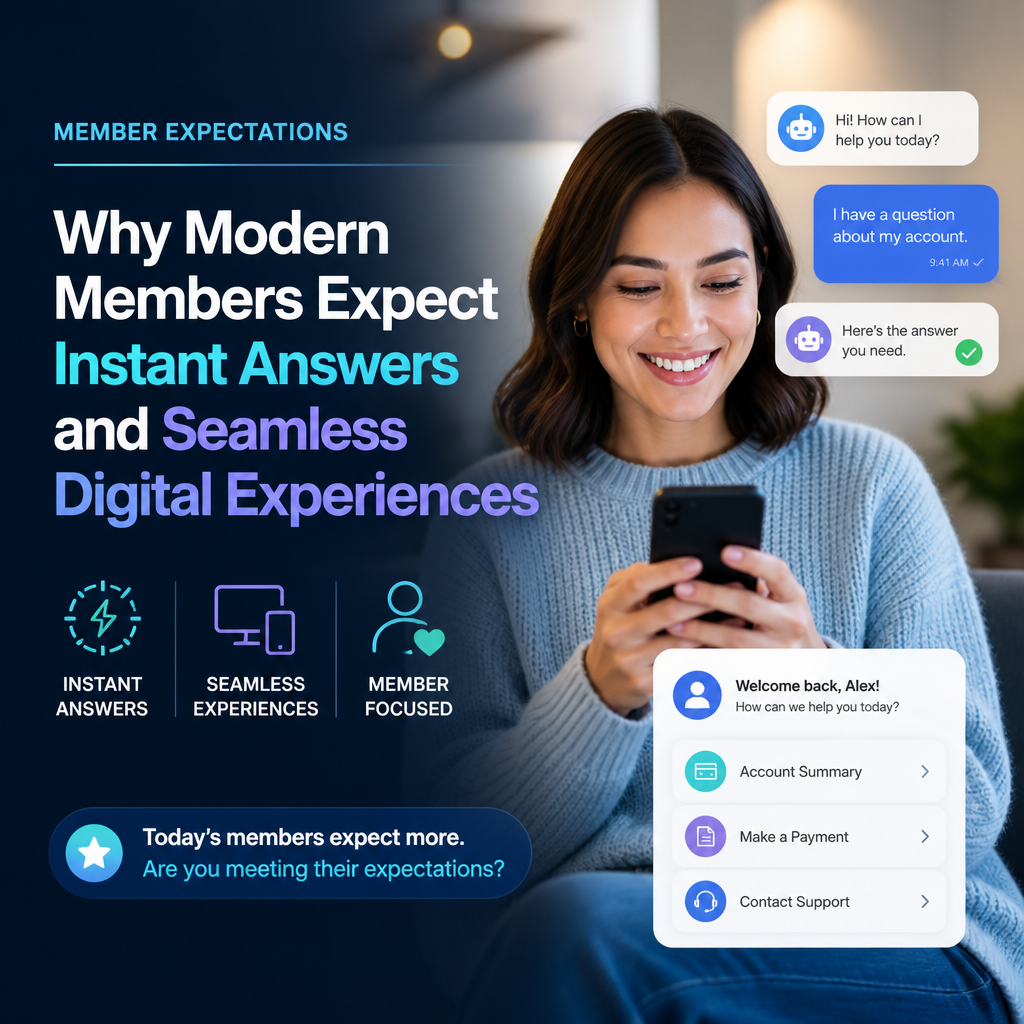
Why Modern Members Expect Instant Answers and Seamless Digital Experiences
Why Modern Members Expect Instant Answers and Digital Experiences
Members today compare every interaction with the quickest, simplest digital services they use elsewhere. They can track a delivery, book an appointment, or get help from a company in minutes. As a result, they increasingly expect the same speed and convenience from associations, clubs, unions, and other membership organizations.
These expectations are not simply about having the newest technology. Members want useful information when they need it, easy ways to complete routine tasks, and support that feels personal. Organizations that meet these needs can build stronger relationships and make membership more valuable.
Everyday Technology Has Changed the Standard
People are accustomed to self-service tools that work around the clock. They search for answers, make payments, update account details, and receive confirmations without waiting for office hours. When a member encounters a slow website or has to send an email for a basic answer, the contrast can feel frustrating.
Modern members expect to be able to:
- Find clear information on a phone or computer
- Register for events without unnecessary steps
- Update their personal details easily
- Access resources whenever they need them
- Receive timely responses to questions
The standard is no longer defined only by what other membership organizations offer. It is shaped by the best digital experiences people have across their lives.
Instant Answers Build Confidence
A quick response signals that an organization is attentive and dependable. Even when an issue cannot be resolved immediately, members appreciate knowing that their request has been received and understanding what will happen next.
That does not mean every question needs a human response in seconds. A searchable knowledge base, clear FAQs, automated confirmations, and timely updates can answer common questions or set expectations while staff handle more complex requests.
Useful digital support should make answers easy to find, not bury them in menus or outdated documents. Content should use plain language, reflect current policies, and address the questions members actually ask. When information is easy to locate, members feel more confident navigating the organization on their own.
Convenience Makes Membership More Valuable
Membership is an ongoing relationship, and routine friction can weaken it. If renewing, registering for a program, or finding a benefit takes too much effort, members may be less likely to participate. Simple digital processes reduce that friction and leave more room for meaningful engagement.
A well-designed member experience might include a central online account, mobile-friendly event registration, digital payment options, and a clear calendar of upcoming activities. These features are most effective when they are connected. Members should not have to enter the same information repeatedly or switch between confusing systems to complete one task.
Convenience also supports members with different schedules and needs. A person who cannot call during business hours can still find information or complete a task online. Accessible design, readable text, and compatibility with assistive technologies help ensure that digital services work for a broader community.
Personalization Matters Alongside Speed
Fast service is important, but members also want to feel recognized. A generic message or irrelevant offer can make digital communication feel impersonal. Organizations can use member preferences, interests, and participation history to share information that is genuinely useful.
For example, a member might receive updates about a professional development program they previously attended, while another sees information about local events. Personalization does not require excessive data collection. It works best when organizations are transparent about the information they use and give members control over their communication preferences.
The goal is to combine efficiency with human understanding. Digital tools can handle repetitive tasks, while staff focus on conversations that require judgment, empathy, or specialized knowledge.
How Organizations Can Keep Improving
Meeting modern expectations is an ongoing process, not a one-time technology purchase. Start by identifying where members encounter delays or confusion. Review support questions, website searches, feedback forms, and registration drop-offs for common patterns.
Then consider practical improvements:
- Prioritize frequent tasks. Make renewals, event registration, and resource access easy to complete.
- Improve the information members rely on. Keep FAQs, policies, and contact details accurate.
- Choose tools that work together. Connected systems reduce repeated steps and inconsistent records.
- Ask members for feedback. Test new processes with people who use them regularly.
- Measure the results. Track response times, task completion, satisfaction, and participation.
A Better Experience Strengthens the Relationship
Members do not expect every interaction to be automated or instantaneous. They do expect an organization to respect their time and make support accessible. Clear answers, convenient services, and thoughtful communication show members that their experience matters.
When digital tools make participation easier, staff can spend less time resolving avoidable problems and more time building community. The result is not just a smoother website or faster response. It is a membership experience that feels relevant, responsive, and worth returning to.