

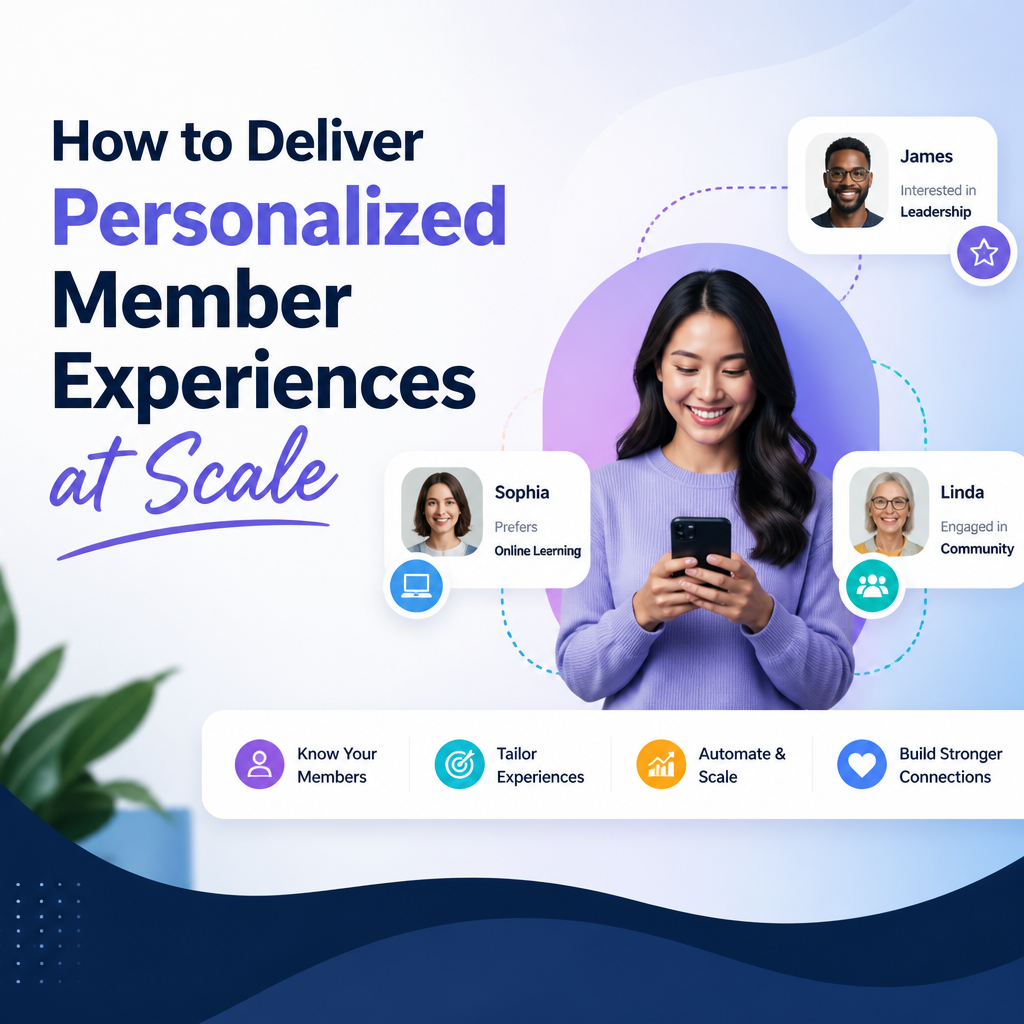
How to Deliver Personalized Member Experiences at Scale
The Secret to Delivering Personalized Member Experiences at Scale
Members expect organizations to understand what they need, communicate at the right time, and make participation feel worthwhile. But as a membership grows, personal attention can seem harder to provide. Staff cannot manually tailor every email, event invitation, and renewal reminder.
The secret is not to make every interaction unique. It is to combine useful member data, thoughtful segmentation, and automation so each person receives relevant experiences without losing the human touch.
Start With What You Know About Members
Personalization is only as good as the information behind it. A member database can reveal more than names and email addresses. It may include interests, professional roles, event attendance, volunteer activity, renewal status, and preferred communication channels.
Start by identifying the information that can genuinely improve the member experience. Avoid collecting data simply because it might be useful someday. Focus on details that help answer practical questions:
- What topics or resources matter to this member?
- How do they prefer to participate?
- What stage of their membership are they in?
- What might encourage them to take a useful next step?
Keep records accurate and easy to update. Members should also understand what information is collected and how it will be used. Transparency helps build the trust that effective personalization depends on.
Segment Members Around Their Needs
A large audience does not have to mean one-size-fits-all communication. Segmentation groups members by meaningful similarities, allowing an organization to deliver more relevant messages without creating a separate campaign for every person.
Useful segments might include:
- New members who need a clear introduction
- Members interested in a particular topic or industry
- Frequent event attendees
- Volunteers and committee participants
- Members approaching renewal
- Longtime members who have become less engaged
Segments should reflect member needs, not just convenient categories. For example, sending an event invitation to people who have shown interest in its subject is more helpful than sending the same invitation to the entire membership list.
Keep segments manageable. A few well-designed groups are often more effective than dozens of narrow categories that are difficult to maintain.
Use Automation to Make Timely Connections
Automation helps teams deliver relevant experiences consistently. It can trigger communications based on actions or milestones, such as joining, registering for an event, completing a course, or nearing a renewal date.
A thoughtful new-member sequence, for example, might welcome someone immediately, introduce useful benefits a few days later, and then suggest a relevant event or community. The messages arrive at a helpful pace instead of requiring staff to remember each step.
Automation should support service, not replace it. Use it to handle predictable tasks while keeping staff available for complex questions, personal outreach, and situations that require empathy. A message that feels automated in the wrong moment can undermine the relationship it was meant to strengthen.
Make Personalization More Than a First Name
Adding a member’s first name to an email is easy, but meaningful personalization goes further. It connects the message to a person’s interests, activity, or goals.
Instead of promoting every program to every member, recommend resources related to their chosen interests. After an event, share a relevant recording, discussion, or next opportunity. For someone who has not participated recently, offer a simple, low-pressure way to reconnect.
These details make communication more useful. They also show members that the organization is paying attention to how people engage—not simply sending more messages.
Keep the Human Touch at Scale
Efficient systems should make an organization feel more attentive, not less personal. That means writing in a clear, warm voice and giving members straightforward ways to reach a real person.
Review automated messages regularly. Make sure they still reflect current programs and policies, and check that the timing feels appropriate. Invite feedback through surveys, conversations, and member support requests. What members say can reveal where personalization is helpful and where it feels intrusive or irrelevant.
It is also important to give members control. Let them update their interests and communication preferences, and make it easy to unsubscribe from optional messages. Respecting preferences is part of delivering a personalized experience.
Measure What Matters and Improve
Track whether personalized communications lead to meaningful outcomes, not just opens and clicks. Look at event participation, resource use, renewals, volunteer involvement, and member satisfaction. Compare results across segments to learn which experiences are working.
Use those insights to refine your approach. If new members attend more events after receiving a tailored welcome sequence, build on it. If a particular message gets little response, reconsider its timing, audience, or usefulness.
Ultimately, delivering personalized member experiences at scale is about making good service repeatable. By using reliable data, thoughtful segmentation, relevant automation, and regular feedback, organizations can help members feel recognized while still serving a large and diverse community.


