
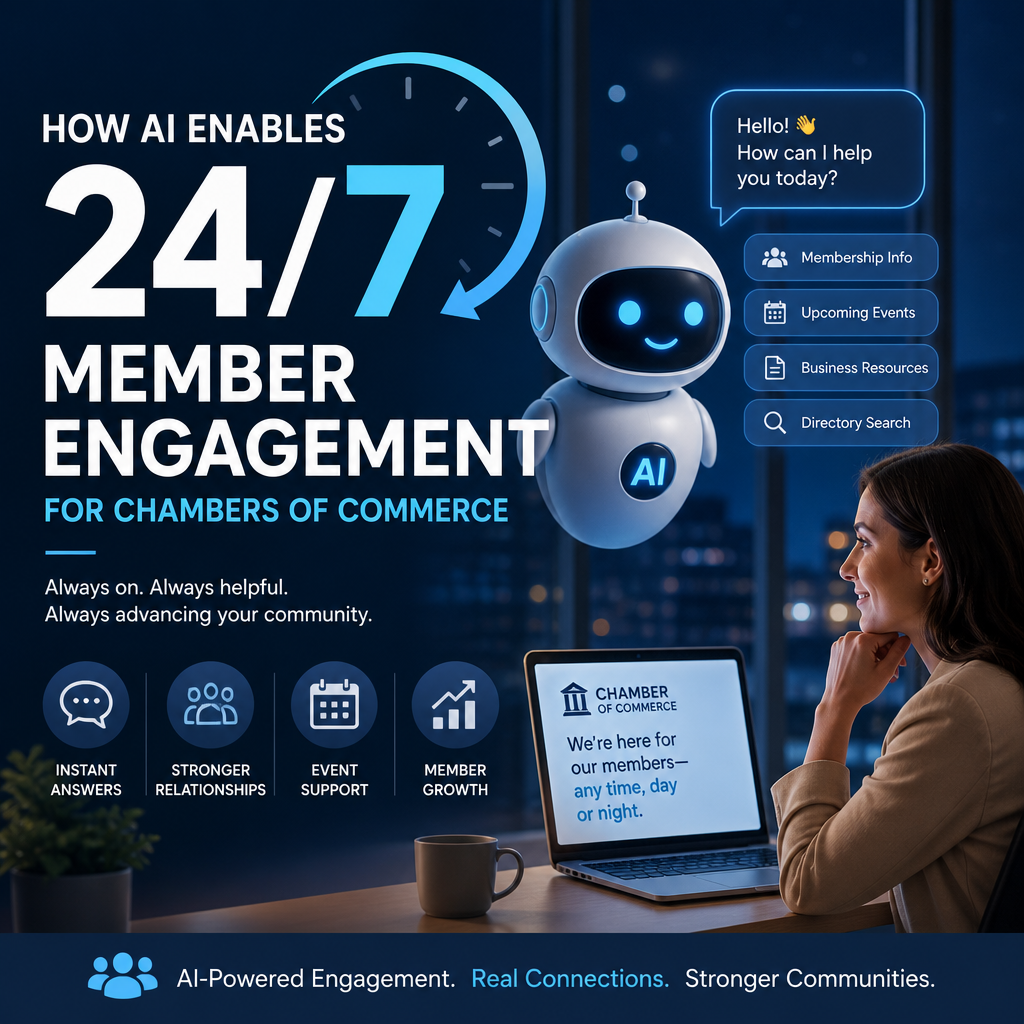
How AI Enables 24/7 Member Engagement for Chambers of Commerce
How AI Creates 24/7 Member Engagement for Chambers of Commerce
Chambers of commerce connect businesses with practical resources, professional relationships, and opportunities to grow. But members do not always need help during office hours. A new business owner may look for a grant late at night, while an established company may need an event recommendation before the workday begins.
Artificial intelligence helps chambers respond to these needs around the clock. By making information easier to find and interactions more relevant, AI can support 24/7 member engagement without requiring staff to be available every hour.
What 24/7 Member Engagement Looks Like
Always-on engagement is more than a chatbot greeting visitors on a website. It means giving members timely access to useful information, personalized recommendations, and clear next steps whenever they need them.
AI tools can help members:
- Find answers to common questions about membership, events, and services
- Discover relevant programs, committees, and networking opportunities
- Receive recommendations based on their interests or business needs
- Connect with the right chamber staff member when a personal response is needed
The goal is not to replace human relationships. It is to make it easier for members to benefit from them.
Ways AI Supports Members After Hours
Answering Routine Questions
AI-powered chat tools can respond to frequently asked questions using information approved by chamber staff. A member might ask how to register for an event, where to update a business listing, or what benefits come with a particular membership level.
Instead of searching through several web pages or waiting for an email reply, the member can receive a quick answer. When a question is sensitive, complex, or beyond the tool’s knowledge, the system can direct the person to a staff contact.
Reliable answers depend on reliable information. Chambers should regularly review the content that powers these tools and make it clear when a response needs confirmation.
Making Programs Easier to Discover
Members may miss opportunities simply because they do not know they exist. AI can recommend events, training sessions, and business resources based on information such as industry, stated interests, or previous participation.
For example, a small business owner interested in hiring may be shown a workforce workshop, while a new member may receive suggestions for introductory networking events. These recommendations help members find relevant value without having to browse an entire calendar.
Personalization should be useful rather than intrusive. Chambers can explain what information they use and give members control over their preferences.
Keeping Conversations Moving
AI can also support communication across email, websites, and member portals. It may help route an inquiry to the correct department, summarize a member’s request for staff, or suggest a helpful resource while someone waits for a response.
This creates a smoother experience: members get immediate guidance, and staff receive context that can make follow-up faster and more personal.
Giving Staff More Time for Relationships
Chamber teams often balance events, advocacy, member services, communications, and administration. AI can reduce repetitive work, such as sorting common inquiries or drafting routine responses for staff review.
That time can be redirected toward work that benefits from human judgment: meeting with business owners, building partnerships, welcoming new members, and addressing complex concerns.
In this way, AI does not have to make a chamber feel less personal. Used thoughtfully, it can help staff provide more attentive service by reducing avoidable delays and administrative tasks.
Building Trust Through Thoughtful Use
Successful AI member engagement requires clear boundaries. Chambers should decide which questions AI can answer, what information it may access, and when a person must take over. Member data should be handled securely, and automated content should be checked for accuracy and tone.
A practical rollout can start small:
- Identify the questions staff answer most often.
- Create a reliable, easy-to-update source of information.
- Test an AI tool with a limited set of tasks.
- Review responses and member feedback regularly.
- Expand only when the system is helpful and dependable.
It is also important to offer a clear path to human assistance. Members should never feel trapped in an automated conversation, especially when they need individualized support.
A More Responsive Chamber
AI gives chambers of commerce a way to be useful beyond the limits of office hours. It can help members find answers, uncover opportunities, and reach the right people at the right time.
The strongest approach combines quick, convenient technology with the trust and local knowledge that define chamber relationships. When AI handles routine support and guides members toward relevant resources, chambers can create a more responsive experience—one that remains available whenever business needs arise.