
How AI Boosts Chamber Staff Productivity Without Increasing Costs
How AI Helps Chamber Staff Increase Productivity Without Increasing Costs
Chambers of commerce often operate with lean teams and tight budgets. Staff members may handle member inquiries, event planning, marketing, research, and administration—all while working to strengthen the local business community.
Artificial intelligence (AI) can help manage that workload without requiring a larger team or expensive technology overhaul. Used thoughtfully, it helps staff complete routine tasks faster, organize information, and focus more time on the work that depends on human judgment and relationships.
Automate Routine Writing and Communication
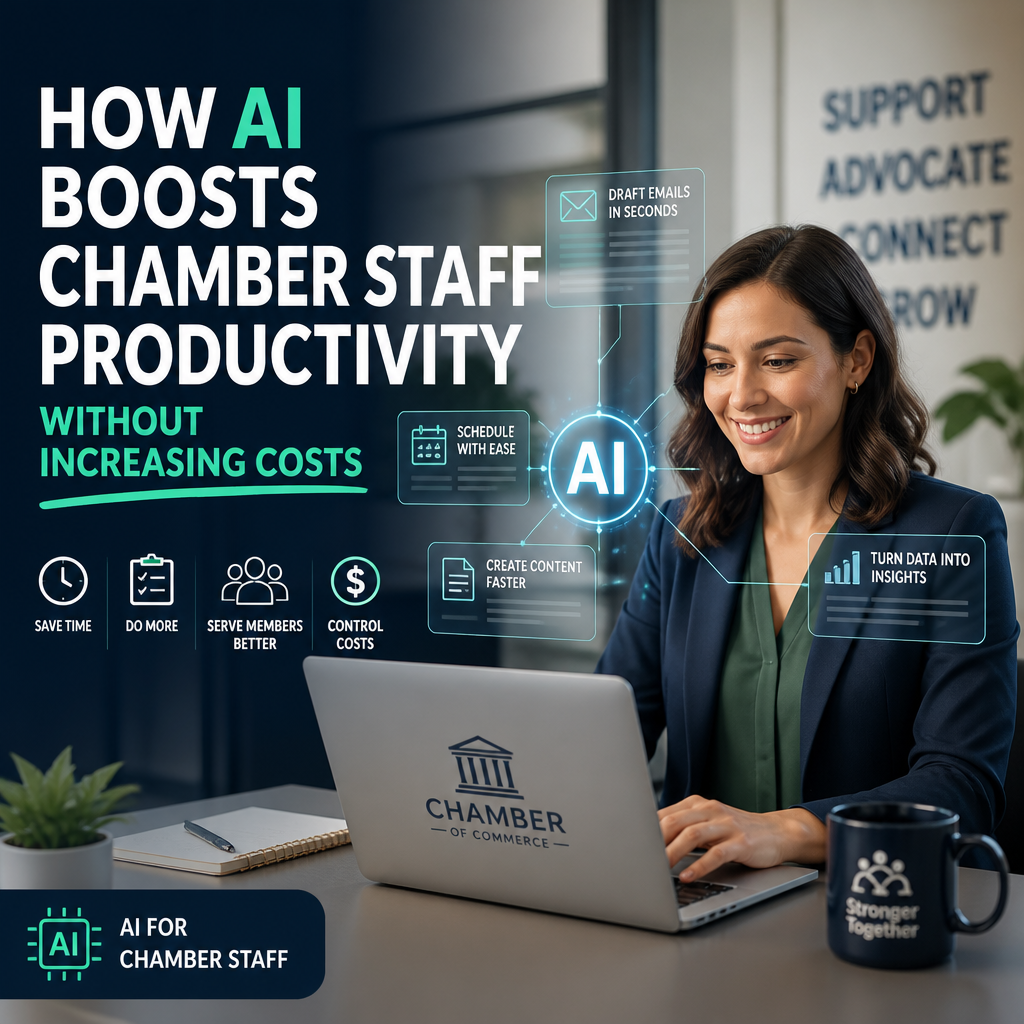
Writing newsletters, event descriptions, social posts, and email updates takes time. AI tools can create first drafts from a few key details, giving staff a useful starting point instead of a blank page.
For example, staff can provide an event’s date, audience, location, and purpose, then ask AI to draft:
- A website description
- A member email invitation
- A short social media post
- A reminder message for attendees
The team can review and edit each draft to match the chamber’s voice and check that all details are correct. AI does not replace personal communication; it reduces the time spent preparing routine messages.
Make Member Support More Efficient
Chamber staff receive recurring questions about membership benefits, event registration, business resources, and local programs. AI can help organize answers to these common inquiries.
A staff member might use AI to summarize a long policy document, locate relevant information in approved materials, or turn frequently asked questions into a clear help page. Some chambers may also use an AI-powered website assistant to guide visitors to existing resources.
These tools work best when they rely on current, chamber-approved information. Staff should review responses regularly and make it easy for users to contact a person when a question is unusual, sensitive, or requires a specific decision.
Get More Value from Existing Content
Chambers often create valuable material that can be reused: webinar recordings, reports, presentations, meeting notes, and member interviews. AI can help transform these resources into additional content.
For example, a webinar transcript might become a short article, a set of key takeaways, or several social posts. A lengthy report could be summarized for a newsletter, while meeting notes could be organized into action items.
Repurposing content extends the usefulness of work the team has already completed. Staff still need to confirm facts, permissions, names, and quotes, but they can spend less time reshaping material from scratch.
Improve Research and Planning
AI can support early-stage research by summarizing public information, grouping survey responses, and identifying themes in member feedback. This can help staff prepare for board discussions, plan programming, or spot questions that deserve further investigation.
For instance, AI might group open-ended survey responses into topics such as workforce needs, transportation, or access to financing. Staff can then review the original feedback and decide which themes are meaningful.
AI-generated summaries should be treated as a starting point, not as final evidence. Important findings should be checked against source documents, reliable data, and the experience of local businesses.
Start Small and Use Tools You Already Have
Increasing productivity does not require every staff member to adopt a new platform. Many organizations can begin by testing AI features already included in software they use, such as office, email, or customer relationship tools.
A practical starting plan is simple:
- Choose one repetitive task, such as drafting event announcements.
- Test an approved tool with non-sensitive information.
- Review the time saved and the quality of the result.
- Create a short process for staff review and approval.
- Expand only if the trial provides clear value.
This approach limits training demands and helps the chamber avoid paying for tools it does not need.
Protect Trust and Keep People in Control
AI can make mistakes, produce outdated information, or reflect bias in its output. Staff should verify facts before publishing or sending AI-assisted content. They should also avoid entering confidential member, employee, financial, or personal information into tools that have not been approved for that use.
Clear guidelines help everyone understand what AI may assist with, what information must stay private, and which decisions require human approval. The chamber remains accountable for its communications and services.
More Time for the Work That Matters
The best use of AI is not simply to produce more material. It is to give chamber staff more room for high-value work: building member relationships, supporting local businesses, convening community partners, and delivering useful programs.
By automating small, repetitive tasks and making existing information easier to use, AI helps chamber staff increase productivity without increasing costs. The strongest results come from practical tools, careful review, and a continued focus on the people the chamber serves.