

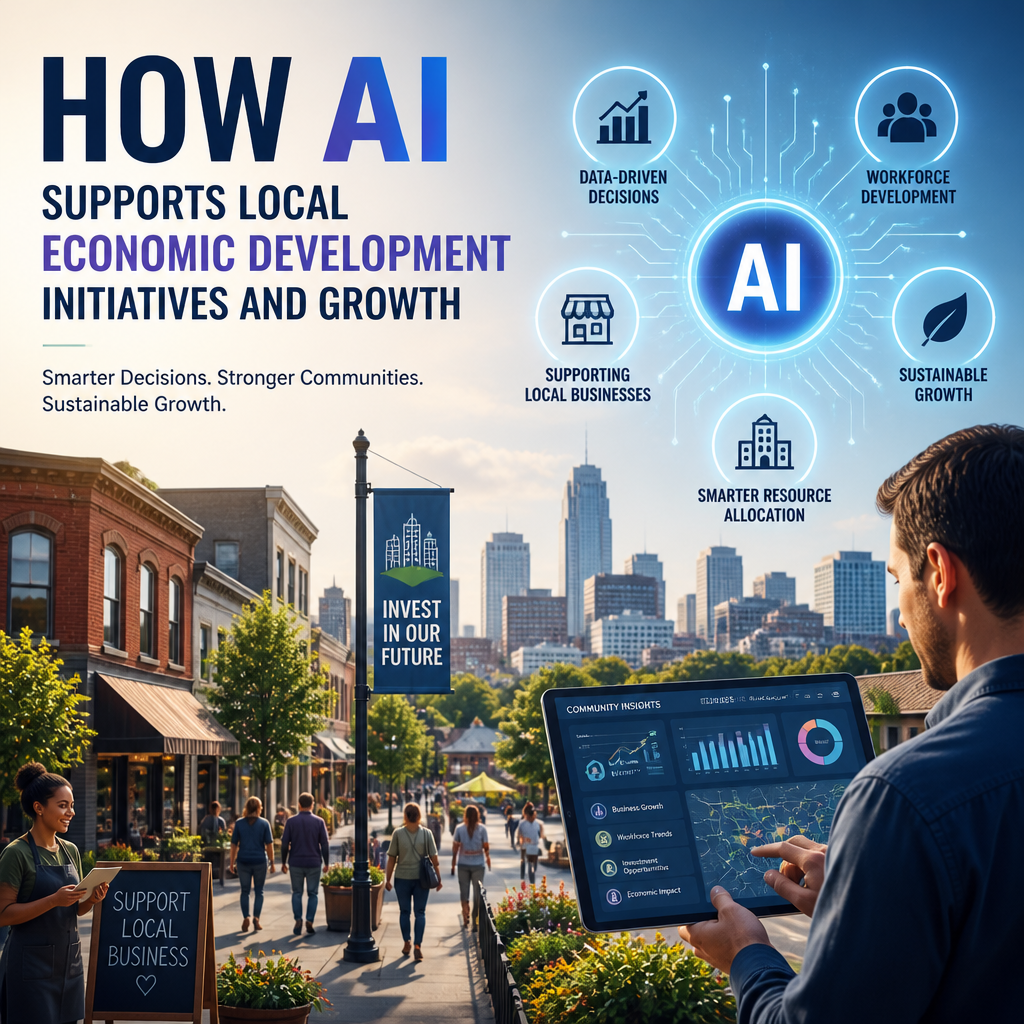
How AI Supports Local Economic Development Initiatives and Growth
How AI Supports Local Economic Development Initiatives
Local economic development depends on understanding what a community needs, where its strengths lie, and how to connect residents and businesses with opportunity. Artificial intelligence (AI) can help cities, towns, and regional organizations make better use of information and deliver services more effectively. It is not a substitute for local knowledge or public decision-making. Used thoughtfully, it is a practical tool for supporting both.
AI systems can analyze large amounts of information, identify patterns, and automate routine tasks. These abilities can help economic development teams respond to changing conditions, target resources, and plan for long-term growth.
Finding Opportunities in Local Data
Economic development organizations often work with data from many sources: business registrations, employment statistics, housing reports, transportation networks, and community surveys. Reviewing these sources manually can be slow, especially for teams with limited staff.
AI tools can help combine and analyze data to reveal trends that might otherwise be difficult to spot. For example, an analysis might show that several neighborhoods have growing numbers of small businesses but limited access to commercial space. Another might identify a rise in demand for workers with particular technical skills.
These insights can guide practical decisions, such as:
- Where to expand business support services
- Which industries may be positioned for growth
- Where transportation improvements could connect workers to jobs
- What skills training local employers are likely to need
The quality of these findings depends on the quality of the data. Local leaders should check for gaps, outdated information, and possible bias before using AI-generated analysis to shape policy.
Helping Small Businesses Compete
Small businesses are central to many local economies, but owners often have little time for research, marketing, and administrative work. AI can make some of these tasks faster and more affordable.
A local retailer, for instance, could use AI-powered tools to draft product descriptions, translate marketing materials, summarize customer feedback, or organize inventory information. A business support organization could offer workshops that teach owners how to use these tools responsibly.
AI can also help economic development agencies answer common questions from entrepreneurs. A carefully managed chatbot might explain licensing steps, point users to grant applications, or direct them to local mentoring programs. This can make information easier to find, particularly outside regular office hours.
However, automated systems should not become the only way to access assistance. Residents and business owners need a clear path to a real person, especially when questions involve complex regulations, financial decisions, or individual circumstances.
Strengthening Workforce Development
Local employers may struggle to find workers with the right skills, while residents may not know which training programs lead to stable jobs. AI can help connect these needs by analyzing job postings, skills requirements, and workforce data.
Training providers can use these insights to update course offerings and identify emerging skills gaps. Career services may use AI tools to help people explore occupations that match their experience or to improve resumes. These applications can be especially useful when paired with career counseling, employer input, and accessible training options.
AI should support—not determine—people’s career choices. Recommendations based on incomplete data can overlook transferable skills or reinforce assumptions about who belongs in certain roles. Human guidance helps ensure that technology expands options rather than narrowing them.
Improving Public Services and Planning
Economic growth is affected by more than business programs. Reliable infrastructure, accessible public services, and good information all shape whether people and companies can thrive.
AI can assist local governments with tasks such as forecasting traffic, identifying maintenance needs, processing service requests, or modeling how development proposals might affect utilities and transportation. Faster analysis may help staff compare options and spot potential problems earlier.
AI can also make public information easier to navigate. For example, tools that translate documents or summarize planning materials may help more residents participate in public discussions. To be effective, these tools must be tested for accuracy and designed with people who have different languages, abilities, and levels of digital access in mind.
Building Trust Through Responsible Use
For AI to support local economic development, communities need clear rules and meaningful oversight. Public agencies should explain when AI is being used, what information it relies on, and how people can challenge or correct important decisions.
Good practice includes protecting personal data, checking systems for bias, and involving residents, workers, business owners, and community organizations in planning. Smaller communities may also benefit from regional partnerships that provide technical expertise and shared tools without requiring each organization to build its own system.
A Tool for Inclusive Growth
AI can help local leaders make informed decisions, reduce routine workloads, and connect people with useful services. Its greatest value comes when it strengthens existing relationships and local expertise.
By starting with clear community goals, checking results carefully, and keeping people involved, communities can use AI to support more inclusive economic development. The technology may identify patterns and speed up processes, but lasting progress still depends on human judgment, public trust, and a commitment to ensuring that opportunity reaches the people who need it most.


