

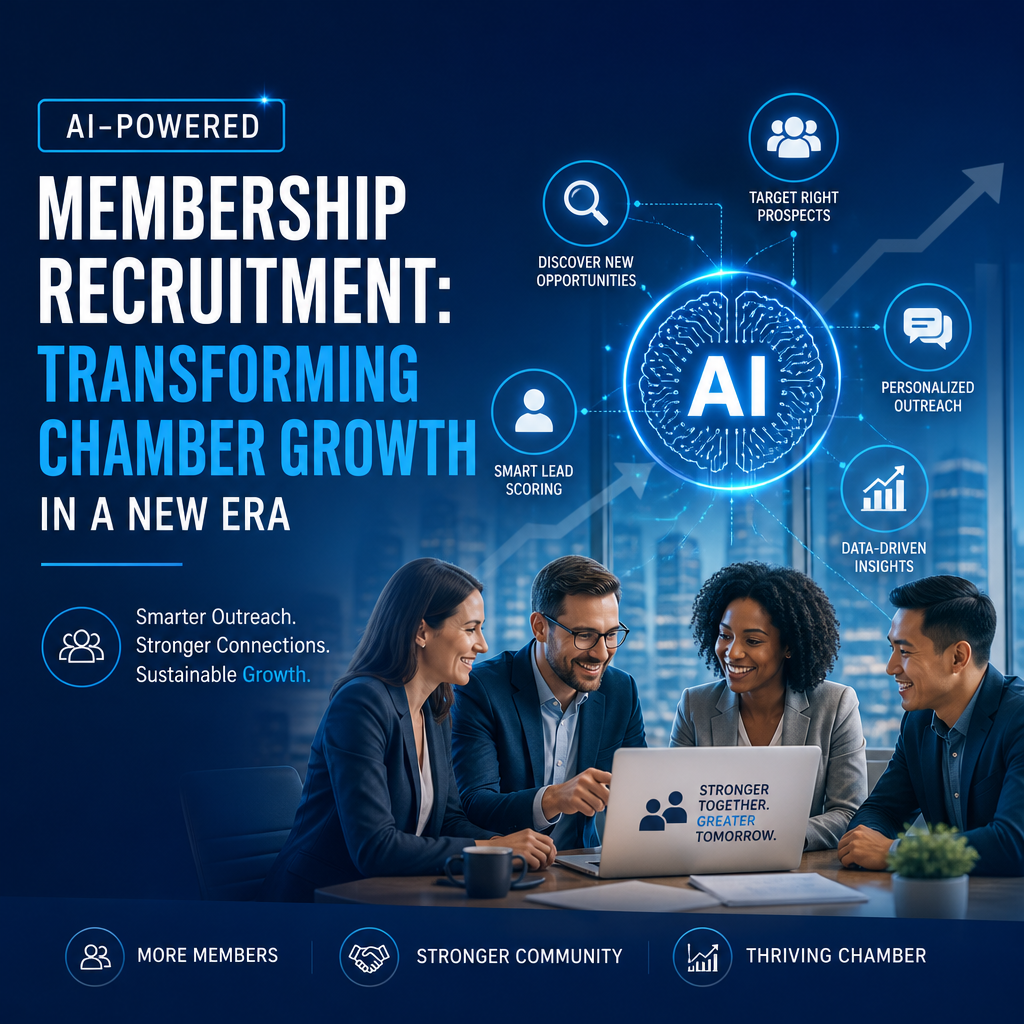
AI-Powered Membership Recruitment: Transforming Chamber Growth in a New Era
AI-Powered Membership Recruitment: A New Era for Chambers
Chambers of commerce have always relied on relationships to attract and retain members. Yet identifying prospective businesses, understanding their needs, and following up at the right time can take substantial staff effort. AI-powered membership recruitment offers chambers new ways to manage this work while keeping personal connections at the center of the process.
Artificial intelligence can help teams organize information, spot patterns, and tailor outreach. It is not a replacement for conversations with local business leaders. Used thoughtfully, it gives chamber staff more time and insight to build them.
What AI-Powered Recruitment Can Do
AI-powered membership recruitment uses tools such as predictive analytics, automation, and natural-language processing to support the member journey. Depending on the platform and data available, these tools can help a chamber:
- Identify businesses that may benefit from membership
- Group prospects by industry, location, or business stage
- Personalize outreach based on likely interests
- Prioritize follow-ups and reduce missed opportunities
- Analyze engagement with events, emails, and other programs
For example, a chamber might use its existing records to find local businesses that regularly attend networking events but have not joined. Staff could then invite those businesses to a conversation about membership benefits that match their interests.
Finding the Right Prospects
Traditional recruitment often depends on referrals, event attendance, and staff knowledge. Those sources remain valuable, but they may not reveal every promising prospect. AI tools can help analyze information the chamber already holds—such as event registrations, website inquiries, or newsletter engagement—to identify useful patterns.
A system might highlight that small professional-services firms in a particular area are engaging with business education programs. That insight can guide outreach, help staff choose relevant events, or suggest a new member benefit.
The goal is not to treat a prediction as a decision. AI can point to possible opportunities, but staff should verify the context. A business may be engaging for reasons unrelated to joining, and a company with little online activity may still be an excellent prospect.
Making Outreach More Relevant
Generic recruitment messages are easy to ignore. With accurate data, AI can help chambers tailor communications to different business needs. A new business may be interested in mentoring and practical guidance, while an established company may care more about policy advocacy, visibility, or regional partnerships.
Personalization should be useful rather than intrusive. Instead of sending a message that reveals extensive tracking, staff can use insights to make a thoughtful invitation: mention a relevant program, explain a clear benefit, and offer a direct conversation.
AI can also assist with drafting emails, summarizing prospect notes, or creating follow-up reminders. Staff should review all generated content for accuracy, tone, and local context before sending it.
Supporting the Member Experience
Recruitment does not end when an organization joins. A strong onboarding experience helps new members understand how to participate and where to find value. AI tools can help teams recommend events, programs, or introductions based on a member’s stated interests.
For instance, a new member focused on hiring might receive information about workforce initiatives, while a retailer may be directed toward local promotion opportunities. These recommendations can make the chamber feel more responsive without requiring staff to manually track every detail.
Still, technology should support human service, not create a maze of automated messages. New members should know how to reach a real person, ask questions, and share feedback.
Using AI Responsibly
Successful AI-powered membership recruitment depends on trust. Chambers should be clear about what data they collect and how they use it. They should also limit access to sensitive information, follow applicable privacy requirements, and check tools for bias or inaccurate assumptions.
A practical approach includes:
- Start with a specific need. Choose a recruitment challenge, such as inconsistent follow-up, before selecting a tool.
- Review data quality. Outdated or incomplete records can produce misleading recommendations.
- Keep people involved. Staff should make final decisions about outreach and membership conversations.
- Measure results. Track meaningful outcomes, including qualified conversations, conversions, and retention—not just email opens.
- Refine over time. Ask staff and members what is working, then adjust the process.
A More Connected Future for Chambers
AI-powered membership recruitment can help chambers work more strategically, uncover overlooked prospects, and deliver more relevant experiences. Its greatest value comes from combining useful insights with local knowledge and genuine relationships.
For chambers considering AI, the best first step is modest: identify one part of recruitment that consumes time or produces inconsistent results, then test a tool against that need. With clear safeguards and a human touch, AI can help chambers connect with the businesses that will shape their communities—and give those businesses stronger reasons to join.


