

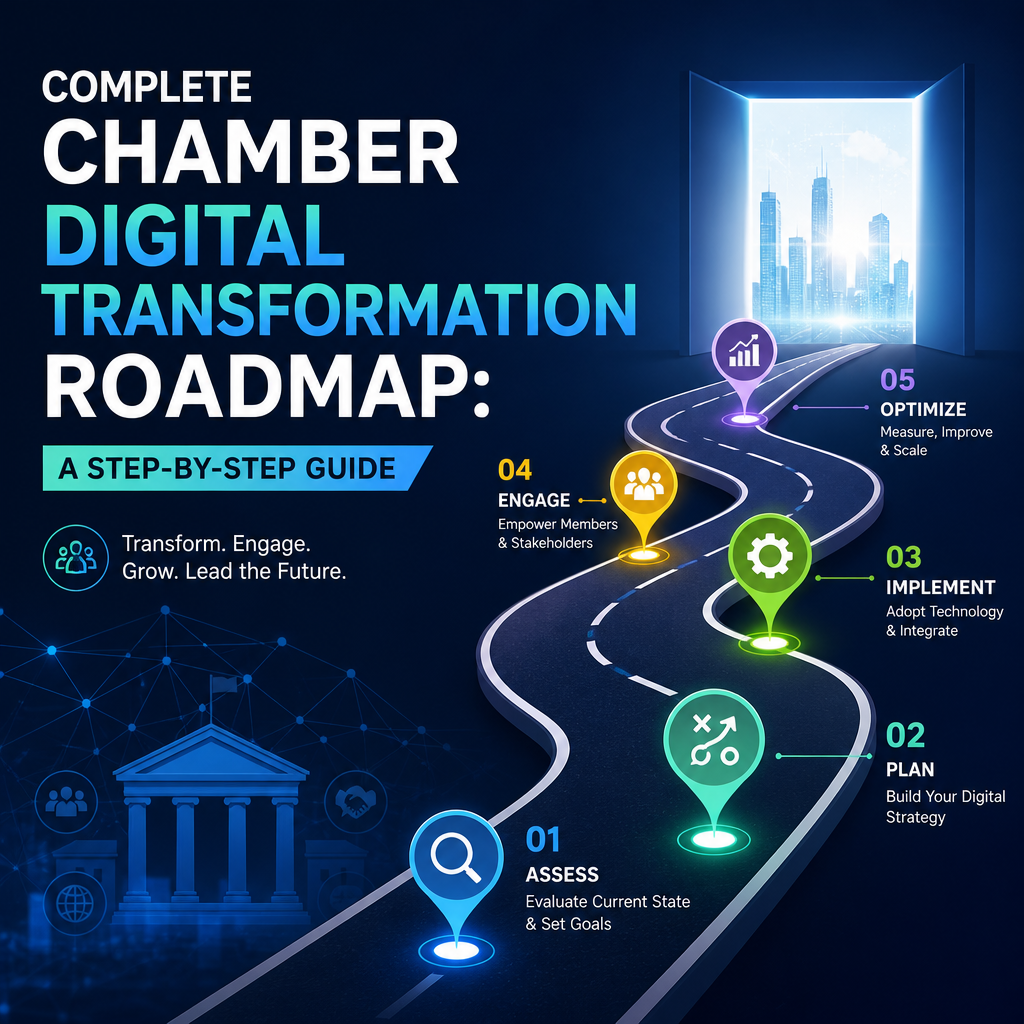
Complete Chamber Digital Transformation Roadmap: A Step-by-Step Guide
The Complete Chamber Digital Transformation Roadmap
A chamber of commerce connects businesses, supports local growth, and represents its members. But changing expectations mean traditional services alone may no longer be enough. Members increasingly expect convenient online access, relevant data, and timely communication.
A chamber digital transformation roadmap helps turn those expectations into a practical plan. Rather than adopting technology for its own sake, it connects digital tools to the chamber’s mission, member needs, and long-term goals.
1. Start With a Clear Vision
Before choosing software, define what transformation should accomplish. A useful vision describes how digital services will improve the member experience and strengthen the chamber’s impact.
Consider questions such as:
- Which member needs are not being met today?
- What services could be easier to access online?
- Where do staff spend time on repetitive administrative work?
- How could better data improve advocacy or economic development?
Set a small number of measurable objectives. These might include increasing event registrations, improving member retention, reducing response times, or growing engagement with online resources.
2. Assess Your Current Capabilities
A realistic roadmap begins with an honest review of existing systems and processes. Inventory the chamber’s website, member database, email platform, event tools, accounting software, and other essential technology.
Then look beyond the tools themselves. Assess how information moves between systems, who has access to it, and whether staff understand how to use it. A modern platform will not solve problems caused by unclear processes or inconsistent data.
Gather input from staff, board members, and a representative group of members. Their feedback can reveal pain points that are easy to miss internally, such as a confusing registration process or difficulty finding member benefits.
3. Prioritize the Member Experience
Digital transformation should make the chamber easier to work with. Start by mapping common member journeys, including joining, renewing, registering for events, finding business resources, and contacting staff.
Look for unnecessary steps, duplicate data entry, and unclear instructions. Then prioritize improvements that offer meaningful value without overwhelming the organization.
A member-centered digital experience may include:
- A mobile-friendly website with clear calls to action
- Online membership applications and renewals
- A searchable member directory
- Simple event registration and payment
- A central portal for benefits, updates, and resources
Not every feature needs to launch at once. A focused first release can provide value while giving the chamber a chance to learn and improve.
4. Choose Technology That Fits
Once priorities are clear, identify the technology required to support them. Evaluate options based on usability, accessibility, security, integration, cost, and the quality of vendor support.
For many chambers, the member relationship management system is a central consideration. It should help staff maintain accurate records, track engagement, manage renewals, and communicate effectively. Other tools should complement this system rather than create disconnected information silos.
Avoid selecting a platform solely because it has the longest feature list. A simpler system that staff can use consistently may be more valuable than a complex solution that requires extensive workarounds.
5. Build Skills and Support Adoption
Technology changes how people work, so staff involvement is essential. Explain why changes are happening, how they will affect daily tasks, and where team members can get help.
Provide practical training based on real responsibilities. For example, event staff may need guidance on registration workflows, while membership staff may focus on data quality and renewal reports.
Identify a few internal champions who can answer questions and share useful practices. Encourage staff to raise concerns early, and treat adoption as an ongoing process rather than a one-time training session.
6. Protect Data and Maintain Trust
Chambers handle valuable information about members, businesses, and community partners. Strong privacy and cybersecurity practices should be part of the roadmap from the beginning.
Use appropriate access controls, secure payment processing, regular backups, and clear data-retention policies. Review vendor security practices and establish procedures for responding to suspicious activity or potential data incidents.
Also make privacy expectations clear to members. Explain what information is collected, how it is used, and how people can update their details or communication preferences.
7. Measure, Improve, and Expand
A digital transformation roadmap should evolve as the chamber learns. Track a few indicators tied directly to the original objectives, such as online renewals, event conversion rates, member portal usage, or staff time saved.
Review these measures regularly and ask members for feedback. If a new service is underused, investigate whether the problem is awareness, accessibility, or design before adding more features.
Once foundational improvements are working, the chamber can explore broader opportunities, such as personalized communications, online learning, digital advocacy tools, or data-informed economic reports.
Make Progress One Step at a Time
The complete chamber digital transformation roadmap is not a single technology project. It is a sustained effort to improve services, processes, and decision-making.
Begin with a clear vision, listen to members, strengthen the organization’s foundations, and prioritize changes that deliver measurable value. With thoughtful planning and consistent learning, a chamber can use digital tools to deepen relationships and serve its business community more effectively.